An Chraobh Airgid
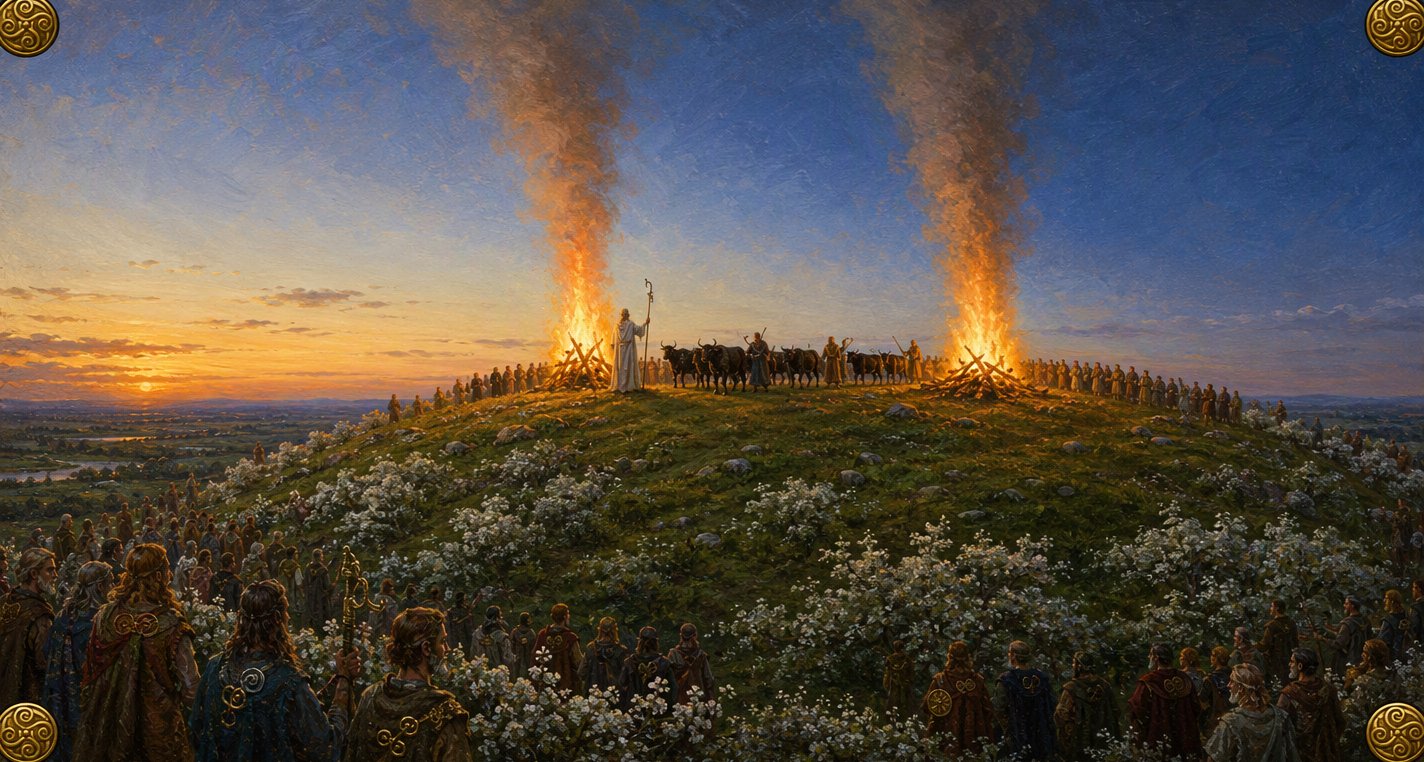
At dusk on Uisneach, among hawthorn blossom, a druid in a white robe stands by one of two great fires as herdsmen drive black cattle between them, a crowd looking on.

Fire festival · 1 May

Bealtaine

The start of summer

Say it: BYAL-tin-uh Munster /ˈbʲɑul̪ˠt̪ˠənʲə/ · Ulster /ˈbʲaːl̪ˠt̪ˠənʲə/

The lucky fire.

Open it on the full site There the Wheel of the Year starts from today, and counts the nights to the next festival.

Cormac’s Glossary, from around 900, calls it bil-tene, “lucky fire”: two fires that druids made with great incantations, to which the cattle were brought to protect them from the year’s diseases. Geoffrey Keating describes a great assembly at Uisneach at Bealtaine.

The word

The name is Irish for May. “Bright fire” is the leading explanation; a god called Bel is doubtful.

Customs

A May bush hung with ribbons, May-morning dew washed on the face, and a great wariness of anyone who came asking for fire or butter that day.

In the tales

  • The Song of Amairgen A poet sets his right foot on Ireland and sings that he is the wind on the sea. Three queens of the old gods meet him, and each asks for the island’s name.
  • The Old Woman of Beare She had her youth seven times, and outlived every man who lived with her. Now she sits under a white veil, and her lament begins with the ebbing of the tide.
  • The Lone Thorn Nobody would cut a lone old thorn in a field: it was the Good People’s. One man cut a thorn in a thicket, and heard a voice he took for one of them, mourning for it.

See also

  • Uisneach The Hill of Uisneach. The navel of Ireland, where the five fifths meet.

Sources

Each tale above lists the sources it is retold from. Every source the site draws on is listed on the full site.