
Folklore of the Aos Sí
The Old Woman of Beare
Caillech Bérri
She had her youth seven times, and outlived every man who lived with her. Now she sits under a white veil, and her lament begins with the ebbing of the tide.
I The Veil
Out at the south-western edge of Ireland the land runs into the Atlantic in long arms of rock, and one of them is Béarra, or Beare, as the old books have it. There was a woman once whom people called the Old Woman of Beare, and the reason is written down: she had fifty foster-children in Béarra. One telling says she was of the Corca Dhuibhne, a people of Kerry.
Her youth came to her seven times, one youth after another. Every man who lived with her lived on until old age killed him, and her grandsons and great-grandsons grew into tribes and peoples. And for a hundred years she wore a veil on her head, a veil that Cummin had blessed. 1
In Irish she is the Cailleach Bhéarra. A cailleach is an old woman, and the word began as the veiled one: caille is a veil.
When the hundred years were over, old age came down on her at last, and sickness with it, and she made a lament. It begins with the sea.
Ebb-tide to me as of the sea!
Old age causes me reproach. 2
II Mead and Wine
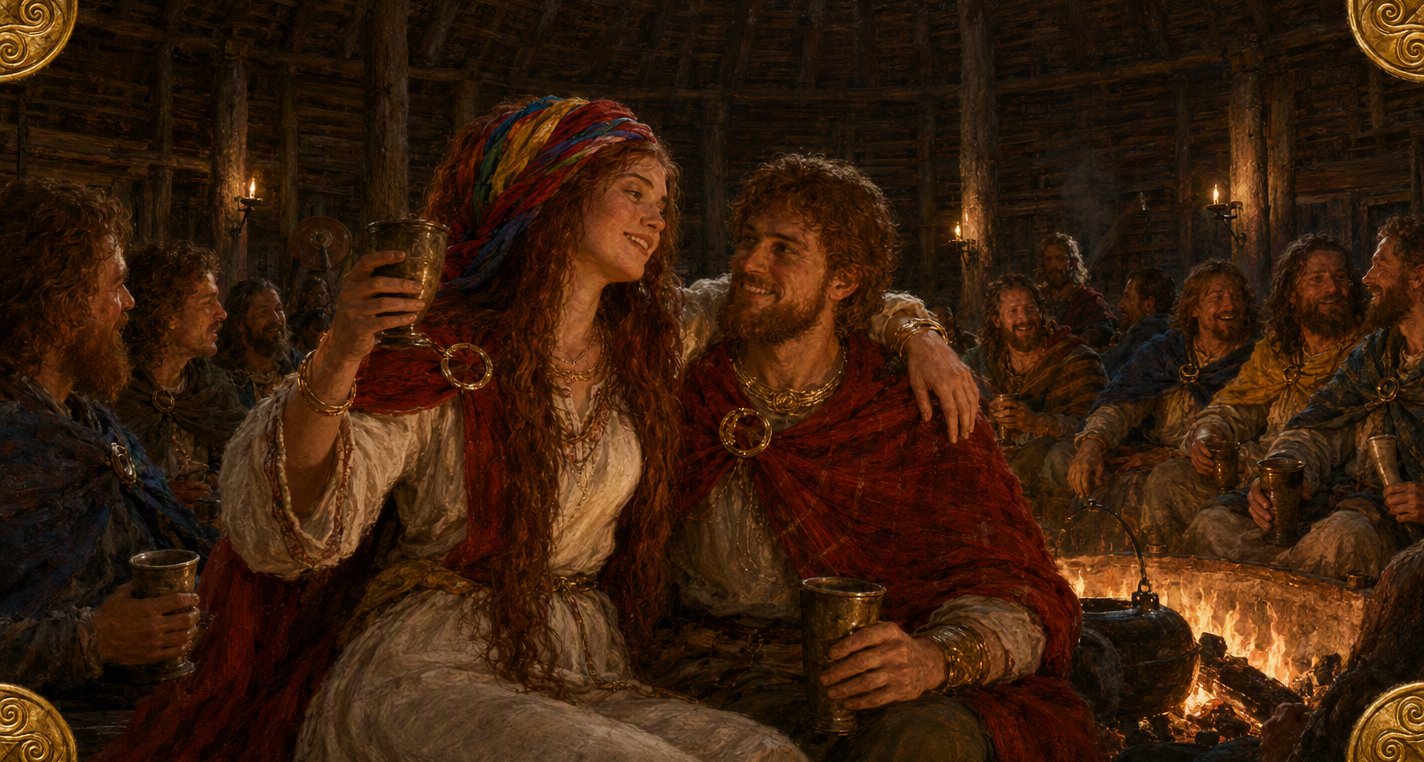
She remembered how it was when she was young. Her smock was always new then. Cloths of every colour decked her head while they drank the good ale. There were swift chariots, and horses that carried off the prizes. Their good days are over, she said, and a blessing on the King who lent them. And her arms went round glorious kings.
Those arms were bony and thin now, for anyone to see, and not fit to be lifted over handsome young men. She had not even a cast-off smock to wear. Her hair was nearly grey, and a poor veil covered it. I do not mind the white veil, she said. Nobody spoke sweetly to her any more, and no wethers would be killed for her wedding feast. The girls were glad when May Day came round, but sorrow suited her better, for she was a wretched old hag.
It is riches you love these days, she said, and not men. In our time it was men we loved.
I had my day with kings
Drinking mead and wine:
To-day I drink whey-water
Among shrivelled old hags. 3
Amen, she said, and woe is me. Every acorn has to fall. After feasting by shining candles, to sit in the dark of a prayer-house!
III Flood and Ebb
The Stone of the Kings on Femen, and the Chair of Rónán: the storms had been at them a long time, and the slabs of their tombs were old and crumbling.
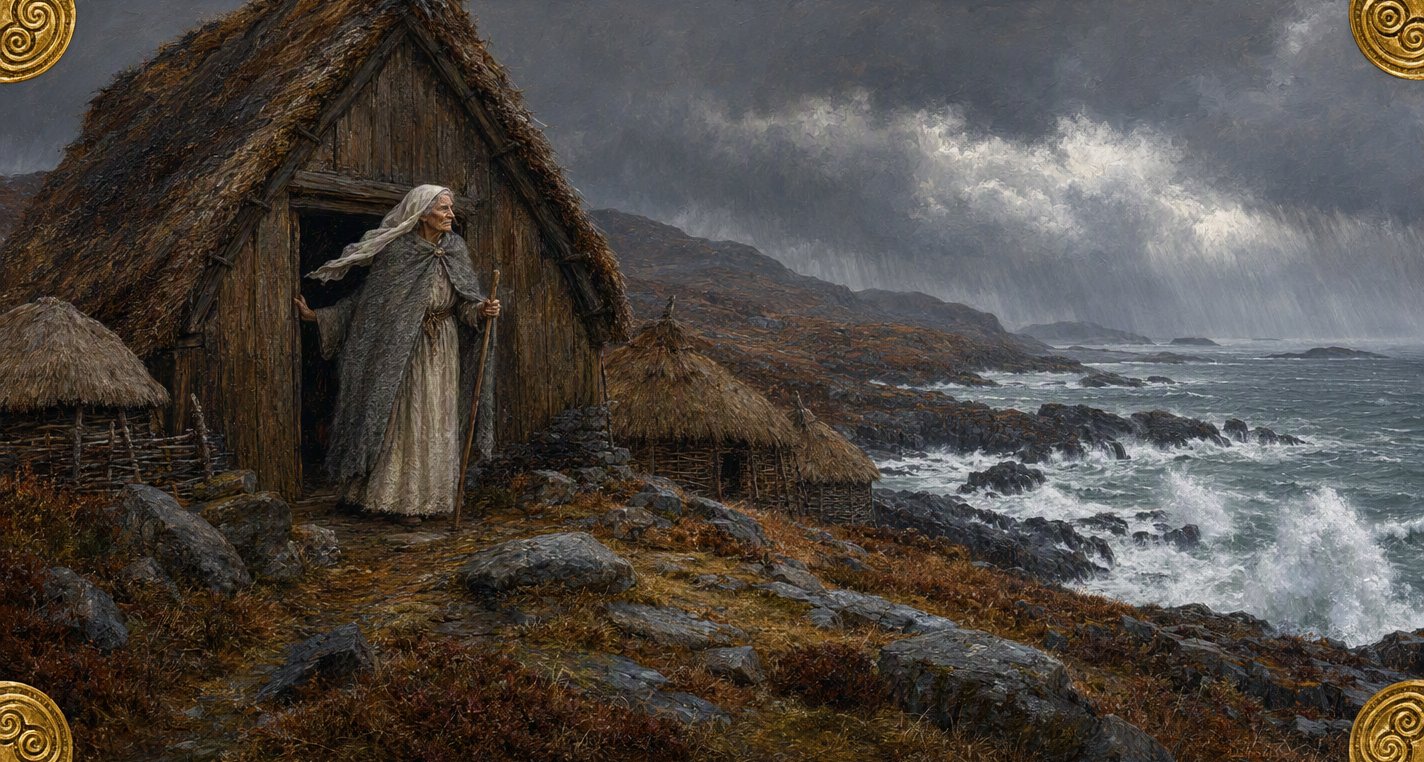
Winter had risen, and the wave of the great sea was talking loud. She did not look for Fermuid son of Mugh to come visiting today. I know what they are doing, she said, though she did not say who they were. They row and row across the reeds of the Ford of Alma, and cold is the house where they sleep.
The summer of her youth was spent, and its autumn with it, and the winter of age, that overwhelms everyone, had begun on her. She saw the grey hair of age on her cloak, and she had to wrap herself up even in the sun. It was O my God with her now, whatever came of it. Let the Son of God come when He thinks it time, she said, and give His command. The time is near that will renew me.
She had known the flood-tide, and the ebb after it, and they had both reached her. The flood would never come into the silence of her kitchen. Many were with her in the dark, and a hand had been laid on every one of them.
Happy is the island in the great sea, she said, for the flood comes back to it after the ebb. She did not look for any flood to come back to her after hers.
There is scarce a little place to-day
That I can recognise:
What was on flood
Is all on ebb. 4

What the tale keeps
The tide goes out from the reefs of Béarra twice a day, and twice a day it comes back. Seven times her youth came to her. Then it went out, and stayed out.
She did not mind the white veil, she said. But she remembered the coloured cloths and the good ale and the kings, and the Christian scribes who copied her lament kept all of it: the mead and the chariots beside the prayer-house and the Son of God.
What the tale keeps is the measure of the sea, and a woman who had known both its tides. Happy is the island in the great sea. The flood comes back to it after the ebb.
Notes
- The prose before the poem is told here from Kuno Meyer’s English: “She had seven periods of youth one after another, so that every man who had lived with her came to die of old age” (Selections from Ancient Irish Poetry, 1911). Lady Gregory’s version begins “It is of Corca Dubhne she was”, and names the man who blessed the veil Cuimire (The Kiltartan Poetry Book, 1919). ↩
- “Ebb-tide to me as of the sea! / Old age causes me reproach.” (Kuno Meyer, Selections from Ancient Irish Poetry, 1911). The Irish begins with the word for the ebb, Aithbe damsa bés mora, and it ends with the same word: atá uile for aithbe. ↩
- “I had my day with kings / Drinking mead and wine: / To-day I drink whey-water / Among shrivelled old hags.” (Kuno Meyer, Selections from Ancient Irish Poetry, 1911). After it Lady Gregory’s version keeps a verse that Meyer’s selection leaves out: “There are three floods that come up to the dun of Ard-Ruide: a flood of fighting-men, a flood of horses, a flood of the hounds of Lugaidh’s son.” (The Kiltartan Poetry Book, 1919). The Irish text on CELT marks that stanza, with five around it, as uncertain and perhaps corrupt. ↩
- “There is scarce a little place to-day / That I can recognise: / What was on flood / Is all on ebb.” (Kuno Meyer, Selections from Ancient Irish Poetry, 1911). Meyer’s selection gives twenty-two quatrains; Gerard Murphy’s edition of the Irish has forty-two. Near the end Lady Gregory keeps one that Meyer leaves out: “It is Jesus Son of Mary keeps me happy at the ebb-tide.” (The Kiltartan Poetry Book, 1919) ↩
Where the tale comes from
Medieval manuscript. An early Irish poem with a short prose preface, kept in later manuscripts. Its date is not settled: CELT puts it about 775 to 825, and Kuno Meyer thought its language pointed to the late tenth century. Meyer translated it in 1899, and again, in part, in 1911.
- The poem is early Irish. CELT, which prints the Irish text from Gerard Murphy’s edition (1956) and calls it Old Irish, dates it about 775 to 825; Kuno Meyer, in a note to his selection of 1911, thought its language pointed to the late tenth century. It survives in later manuscripts: CELT lists five, among them two copies in one Trinity College Dublin manuscript, MS 1337 (H 3.18). Kuno Meyer edited and translated it in Otia Merseiana (Liverpool, 1899) and printed part of his translation again in Selections from Ancient Irish Poetry (1911). Lady Gregory told it in her own Kiltartan English as “The Hag of Beare” (1919).
- This retelling follows Meyer’s readings of the Irish, and they are not always those of Gerard Murphy’s modern edition (1956). There the stones of the kings have long been beaten by storms but are not old and crumbling; and where Meyer reads a man’s name, Fermuid son of Mugh, the Irish words fer maith, mac moga can mean “a good man, a servant’s son”, with no name at all.
- Like nearly everything in early Irish, the poem was copied by Christian scribes, and its speaker is a woman under a blessed veil, in a prayer-house, calling on the Son of God, who still remembers kings and mead. Eleanor Hull read her as a figure of the old Ireland: “The ‘Hag of Beare’ seems to be symbolic of pagan Ireland, regretting the stricter regime of Christianity, and the changes that time had brought about.” (The Poem-Book of the Gael, 1913)
- Hull also called it “the earliest of the long series of allegorical songs in which Ireland is depicted under the form of a woman” (The Poem-Book of the Gael, 1913). Patrick Pearse began his poem Mise Éire (1912) with her: Mise Éire: Sine mé ná an Chailleach Bhéarra, I am Ireland: I am older than the Old Woman of Beare. Hull wrote on the “Legends and Traditions of the Cailleach Bheara or Old Woman (Hag) of Beare” in the journal Folklore in 1927.
Sources
- Selections from Ancient Irish Poetry · Kuno Meyer (1911)
- The Kiltartan Poetry Book: "The Hag of Beare" · Lady Gregory (New York: Putnam, 1919), via the University of Pennsylvania Digital Library
- Aithbe dam bés mora: Irish text · CELT, University College Cork, from the edition of Gerard Murphy, Early Irish Lyrics (1956)
- The Poem-Book of the Gael, Introduction · ed. Eleanor Hull (London: Chatto & Windus, 1913)
- The Hag of Beara · Wikipedia
- Cailleach · Wikipedia
- Mise Éire · Wikipedia
- Beara Peninsula · Wikipedia
- Placenames Database of Ireland · logainm.ie